My name is Dr. Evelyn Reed, and for most of my professional life, that name meant almost nothing to the public, and that was exactly how I preferred it.
I had spent two decades dedicating every waking hour to the labyrinthine complexities of Advanced Bio-Integrated AI Systems, a field so specialized it barely registered outside a handful of elite research institutions.
Within those hallowed halls, I was known, not by my face or my unassuming demeanor, but by the groundbreaking theories and paradigm-shifting discoveries that earned me the moniker "The Architect" among my peers.
Anonymity was my shield, allowing me to pursue pure science, unburdened by the distractions of public scrutiny, academic politics, or the insidious biases that often cloud judgment based on superficial appearances.
My work, particularly the "Artemis Project," was poised to revolutionize human-machine interfaces, holding the potential for both unimaginable progress and profound ethical dilemmas.
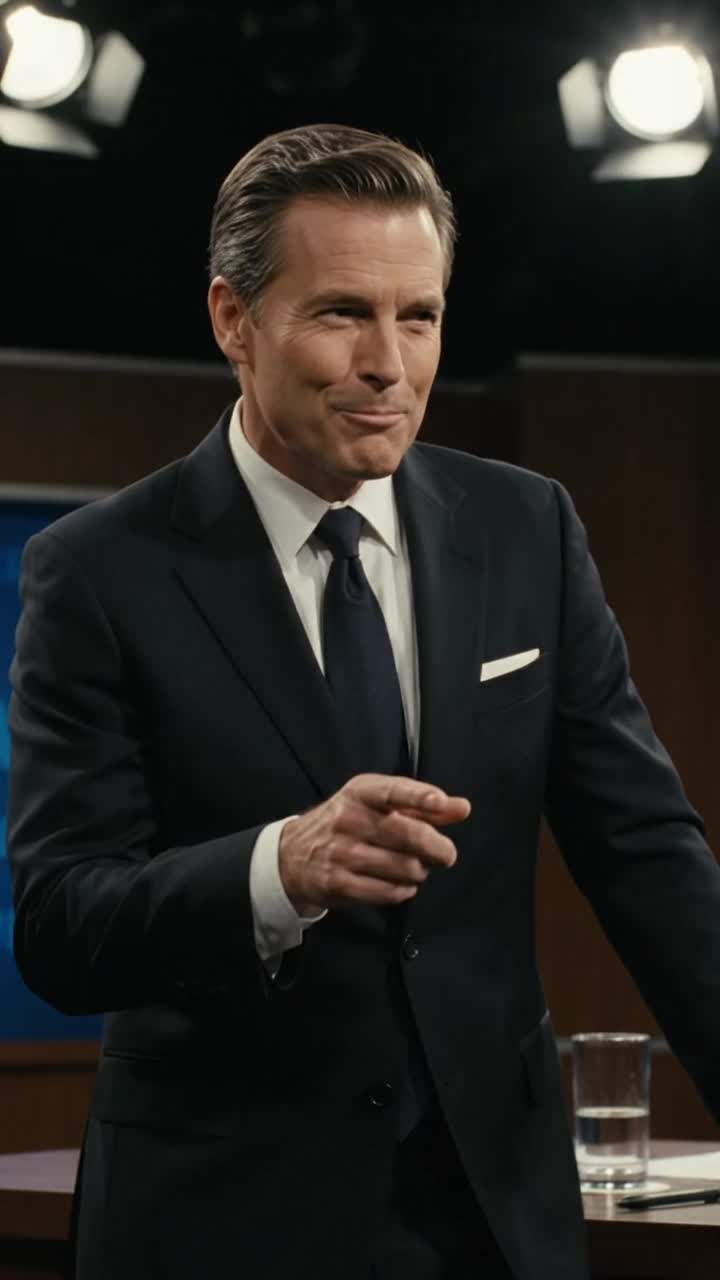
It was the ethical implications that led to my reluctant agreement to appear on "FutureScape," a popular but often sensationalist debate show.
My intention was simple: to offer a voice of reason, a nuanced perspective on a complex topic that deserved more than soundbites and hyperbole.
I arrived at the glittering, sterile studio feeling acutely out of place amidst the polished wood, flashing screens, and the palpable ego of television.
The host, Mark Peterson, a man whose smile seemed permanently affixed by some invisible wire, greeted me with a perfunctory nod, his eyes already scanning for someone more "telegenic."
Dr. Arthur Finch, the other panel expert, was a self-important academic, draped in an expensive tweed jacket, whose sneer conveyed volumes about his opinion of anyone not in his immediate social and intellectual orbit.
From the moment we sat down, I could feel their collective dismissal, a cold, dismissive wave washing over me.
The debate began, a chaotic volley of half-truths and grandstanding, far removed from the sober intellectual exchange I had envisioned.
I tried to interject, to ground the conversation in actual scientific principles, but my carefully constructed arguments were met with interruptions or, worse, patronizing smiles.
Mark, ever the showman, relished in painting me as an outlier, a voice of caution holding back progress.
Arthur, meanwhile, delighted in framing my concerns as naive, as if my worries about the future of AI were simply the musings of an inexperienced academic.
The cameras, I could sense, were primarily focused on their performative outrage and dismissive gestures.
My plain dark suit, my slightly messy bun, and my thick-rimmed glasses seemed to amplify their disdain, turning me into the visual punchline of their intellectual superiority.
I watched as Mark leaned into his microphone, a smirk playing on his lips, turning to address me directly.
"Dr. Reed, with all due respect, your 'theories' are… quaint," he began, his tone dripping with condescension.
He paused for effect, letting his words hang in the air, allowing the muted murmurs of agreement from the studio audience to swell around us.
"Perhaps you're new to the field?" he finished, his eyes wide with feigned concern.
A fresh wave of indignation washed over me, but I forced myself to maintain a placid expression.
Then, Dr. Finch, seizing his cue, chimed in, his sneering face filling the monitor beside me.
"Indeed, Mark," Arthur drawled, looking down his nose as if speaking to a particularly slow student.
"Some perspectives belong in textbooks from decades past, not a live debate," he added, a subtle mic feedback punctuating his elitist pronouncement.
My mind raced, the years of silent dedication, the countless sleepless nights, the intellectual battles fought and won in sterile labs, all flashing before my eyes.
They were dismissing not just me, but the entirety of my life's work, the crucial warnings I desperately needed to convey to the public.
A calm, chilling resolve settled over me.
I took a slow, deliberate breath, my hands, which had been clenched under the table, now resting casually on my lap.
My eyes, usually softened by introspection, sharpened imperceptibly behind my glasses.
"Actually, Dr. Finch, Dr. Peterson," I began, my voice quiet but firm, "I'm not new."
My hand, with a practiced motion, reached inside the breast pocket of my plain suit jacket.
Their smiles faltered slightly, a flicker of confusion crossing their faces, but they quickly recovered, assuming I was reaching for some obscure note or a prop.
But it wasn't a note.
My fingers closed around a laminated card, its edges worn smooth from years of carrying it.
I pulled it out, slowly, deliberately, the simple act suddenly imbued with an unexpected weight.
As I raised the card, holding it for the cameras to capture, for the panel and the audience to see, the studio lights seemed to catch its surface, highlighting the crisp, official lettering.
My eyes swept over the now-stunned faces of Mark and Arthur, their carefully constructed personas of arrogance crumbling before me.
The host's smirk vanished, replaced by an expression of slack-jawed disbelief, his eyes widening in horror as he processed the information on the card.
Dr. Finch's condescending expression twisted into a silent gasp, his face paling visibly.
A collective gasp rippled through the audience, a sound amplified by the studio's acoustics, as the full weight of my identity settled upon them.
A dramatic musical cue swelled, momentarily filling the sudden, thick silence.
I lowered the card slightly, but kept it visible, a small, knowing smile finally gracing my lips.
"Perhaps you've heard of the 'Artemis Project'?" I said, my voice now imbued with a quiet, undeniable authority.
"I lead it."
The music swelled again, then faded, leaving only the stunned silence of the studio, broken only by my calm assertion.
The director, I later learned, cut to a commercial break almost immediately, an unprecedented move in the middle of a live segment.
Backstage, chaos erupted.
Mark Peterson and Dr. Arthur Finch were a study in utter humiliation, their faces a mottled mix of fear and indignation.
They stammered apologies, their voices devoid of their earlier bombast, replaced by panicked whispers about ratings and careers.
My research team, who had been watching from the green room, burst in, their faces alight with triumphant glee, having witnessed their leader finally unleash her hidden power.
Overnight, the clip of "The Anonymous Scholar No More" went viral, igniting a media frenzy unlike anything I had ever experienced.
My quiet life, my carefully guarded anonymity, was irrevocably shattered.
There were calls from every major news outlet, invitations to prestigious conferences, even inquiries from government agencies seeking my direct input.
The public reaction was a dizzying spectrum: adoration from those who celebrated the takedown of intellectual snobbery, skepticism from those who doubted such brilliance could exist outside traditional academic pipelines, and intense scrutiny from everyone else.
I missed my peaceful existence, the luxury of being judged solely by the merit of my ideas, not the spectacle of my reveal.
Yet, there was also a profound sense of vindication, a bittersweet satisfaction that my message, which had been so carelessly dismissed, now had an undeniable platform.
The "Artemis Project," once an obscure endeavor, suddenly commanded immense funding and global recognition.
Mark Peterson and Dr. Arthur Finch, their reputations irrevocably damaged, faced significant professional repercussions, their fall a public testament to the dangers of intellectual arrogance.
I became a reluctant public figure, learning to navigate the spotlight, using my newfound visibility to advocate for responsible AI development and the importance of intellectual humility.
The world, I realized, needed to hear the truth, even if it meant sacrificing the quiet sanctity of my own existence for the greater good.