My name is Alex, and for years, I dedicated a significant part of my life to the "Hope Springs Foundation," a charity that promised to bring mobility to those in need, inspired by its radiant founder, Sarah Albright.
Sarah was our beacon.
She was the embodiment of resilience, a woman confined to a wheelchair since a tragic accident in her late twenties, yet she faced life with an unwavering smile and an indomitable spirit.
Her story was deeply moving, often shared with a quiet grace that brought tears to the eyes of even the most cynical donors.
She spoke of the daily struggles, the invisible barriers, and the profound longing for independence that her foundation aimed to restore for others.
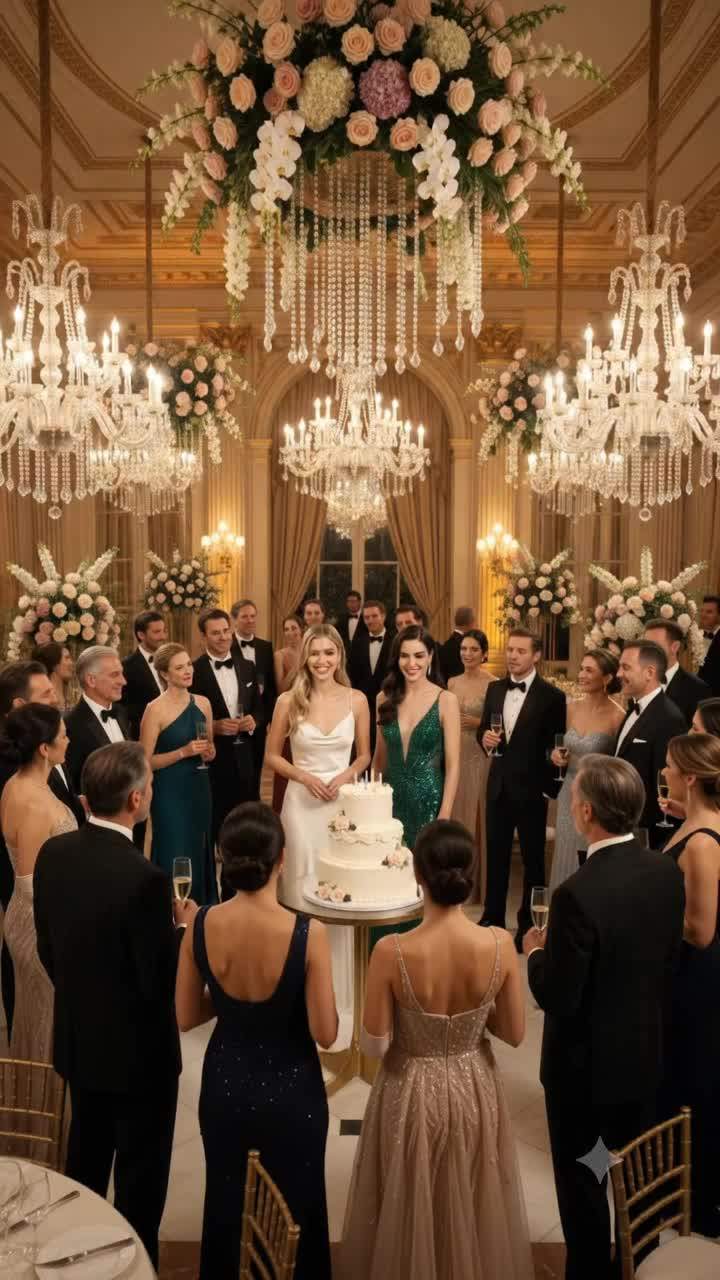
I first met Sarah at a local fundraising gala, her wheelchair positioned prominently on the stage, a symbol of both vulnerability and strength.
Her dark, expressive eyes, framed by perfectly styled silver hair, conveyed an inner peace that I found instantly captivating.
She wasn't just asking for money; she was sharing a piece of her soul.
Like so many others, I was deeply moved by her personal testimony and the tangible impact Hope Springs seemed to be making in the community.
I started as a modest donor, but soon, I was volunteering my weekends, helping with events, coordinating outreach, and even accompanying Sarah to various public appearances.
I felt a genuine connection to the cause and, more profoundly, to Sarah herself.
She was more than a founder; she was a friend, a mentor, a living testament to the human spirit's ability to overcome adversity.
I saw her as a saint, a selfless individual who had turned her personal tragedy into a force for good.
The donations poured in, millions of dollars over the years, all carefully managed by a board Sarah chaired.
Hope Springs funded state-of-the-art wheelchairs, provided physical therapy grants, and even modified homes to be more accessible for individuals with severe mobility impairments.
We even had a section on our website featuring success stories, often with Sarah personally delivering new equipment, her face glowing with genuine compassion.
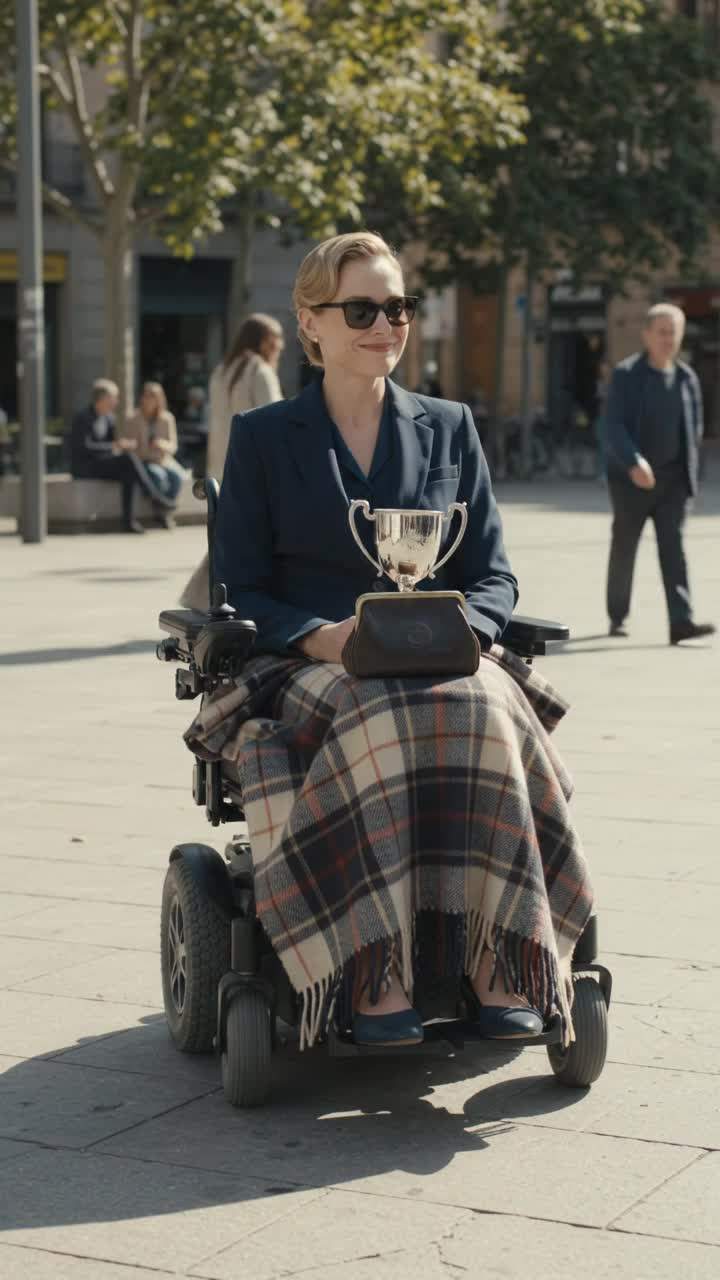
She always wore a certain kind of elegant yet practical attire, often a tailored blazer over a soft blouse, her legs invariably covered by a tartan blanket even in warmer weather.
She never seemed to leave her wheelchair, not even for a moment, and I'd witnessed the careful, often slow, assistance she required to transfer from her chair to a car seat or a specially adapted stage lift.
There were subtle whispers sometimes, questions from new volunteers or cynical journalists, about the lack of specific details regarding her accident or the precise nature of her injury.
But Sarah always brushed them off with a gentle laugh, explaining that her story was merely a catalyst, and the focus should remain on those Hope Springs served.
And we, her devoted followers, believed her implicitly.
We defended her, citing her unwavering dedication and the visible impact of her work.
The idea that Sarah, our Sarah, could be anything but utterly genuine was unthinkable.
Then came that Tuesday afternoon, a day that felt like a punch to the gut, a seismic shift in my understanding of trust and human nature.
I was enjoying a rare lunch break in the bustling town square, a vibrant hub of activity with street performers, vendors, and people simply enjoying the sunshine.
I had just grabbed a coffee and was looking for a bench when I saw her.
Sarah.
She was in her gleaming, custom-built wheelchair, positioned near a small fountain, holding a small, pristine charity award.
She had her usual serene, almost beatific smile on her face, dark sunglasses hiding her eyes as she subtly nodded to a few passersby who recognized her.
I felt a familiar warmth, a sense of pride in knowing such an inspiring person, and considered going over to say hello, but decided against it, not wanting to disturb her moment of public reflection.
Suddenly, a small, heavy coin purse, one of those old-fashioned leather ones, slipped from her lap.
It hit the cobblestone ground with an unexpectedly loud clatter, the sound sharp and jarring against the gentle hum of the square.
My eyes, and many others, instinctively darted towards the sound.
Sarah's serene smile froze instantly.
It wasn't a slow dissolve, but an abrupt halt, like a faulty projector suddenly jamming on a single frame.
A flicker of pure, unadulterated panic flashed across her face, visible even behind her sunglasses as her head whipped around, her eyes darting nervously around the square.
Her breath hitched audibly, a sharp, gasping sound that made me frown.
Her gaze fixed on the fallen purse, a desperate, almost primal need seizing her expression.
The next moments unfolded in a blur, yet they are etched into my memory with agonizing clarity.
With a sudden, almost desperate surge of energy that defied everything I thought I knew about her, Sarah pushed off her wheelchair.
She didn't carefully transfer, didn't ask for help, didn't even use the special handles we'd installed everywhere for her.
She simply stood up.
Not awkwardly, not with difficulty, but with a fluid, almost athletic motion that suggested a lifetime of strength and agility.
Then, she took two quick, strong steps towards the fallen purse, bending down swiftly to snatch it from the ground.
It was all over in a few seconds, a blink-and-you-miss-it act that screamed of fraud.
A young man, casually dressed, standing a few feet away, had his phone raised, filming the entire sequence.
His expression, initially one of idle curiosity, morphed into one of stunned disbelief, then a smirk of knowing triumph.
Sarah, now standing upright, clutching the purse, turned to face him, her eyes wide with terror and exposed shame.
The man lowered his phone slightly, his voice cutting through the sudden, stunned silence of the square.
"Well, look at that," he said, his tone dripping with sarcasm. "A miracle!"
Sarah's face crumpled, her voice trembling, a pitiful, desperate whisper.
"Please... don't..." she pleaded, reaching out a hand, then quickly pulling it back, as if realizing the futility of her gesture.
The man, Mark, I later learned, smirked again, raising his phone higher.
"The internet's gonna love this 'recovery'," he stated, his words a death knell to her carefully constructed world.
Sarah's shoulders slumped in utter defeat, her head dropping forward as if severed from her spine.
The small crowd around us, initially confused, started to register what they had just witnessed.
Gasps rippled through the square, murmurs growing into a chorus of disbelief and anger.
I stood there, frozen, my coffee forgotten, the taste of ashes in my mouth.
The woman I had admired, the saint I had believed in, was a fraud.
My hero was a liar.
Mark’s video, predictably, went viral within hours.
"The Miracle Woman of Hope Springs," read one headline, "Caught Walking!"
The internet, with its insatiable appetite for scandal, dissected every frame.
The initial shock gave way to outrage, then a furious demand for answers.
The subsequent investigation was swift and brutal.
It was revealed that Sarah Albright, whose real name was Sarah Jenkins, had never been paralyzed.
She had sustained a minor injury years ago that required a brief period of rehabilitation, but she had fully recovered.
The "accident" had merely been a convenient narrative to launch her career as a benevolent fraudster.
The millions donated to Hope Springs, intended for those truly in need, had been funneled into a network of offshore accounts, luxury properties, and an extravagant lifestyle she had meticulously hidden from public view.
She had expertly manipulated sentiment, preying on people’s empathy and desire to do good.
The tartan blankets, the careful transfers, the lack of specific medical details – all carefully curated elements of her elaborate performance.
Even the charity award she was holding, meant to be an honorary recognition, was later found to be one she had commissioned herself.
The impact on the real disabled community was devastating, their trust in genuine charitable organizations severely eroded.
For me, the betrayal was deeply personal.
Every hour I had volunteered, every dollar I had donated, every word of praise I had ever uttered about Sarah felt like a cruel joke played on my naive sincerity.
I felt foolish, angry, and profoundly disillusioned.
The foundation was dissolved, its assets frozen, and Sarah was arrested, facing a litany of fraud charges.
She eventually pleaded guilty, her public humiliation complete, her once-glowing image shattered beyond repair.
She received a lengthy prison sentence, a fate she deserved for the extensive damage she had caused.
But even after the legal proceedings concluded, the emotional scars remained.
I struggled with the concept of trust, constantly second-guessing intentions, finding it hard to believe in the altruism of others.
The experience taught me a harsh lesson about appearances and the dark side of human nature.
It also made me re-evaluate my own idealism, forcing me to confront the uncomfortable truth that even the most inspiring stories can hide the most profound deceptions.
I still believe in giving, in helping others, but now, it's tempered with a newfound skepticism, a cautious awareness that beneath the surface of every saintly smile, there might just be a hidden agenda, waiting for a coin purse to drop and expose the ugly truth.