The smell of sterile cleaner still clings to my memory, even now, months later.
It was the scent of the hospice, a place that felt more like an emotional holding cell than a sanctuary.
My mother, Eleanor, was fading fast, her breath growing shallower with each passing day.
Her mind, however, remained sharp, often drifting back to the rose garden she cherished at our family home.
That house, a warm embrace of brick and history, was her entire world.
It held generations of laughter, tears, and whispered secrets.
It was the only tangible piece of our family’s legacy left.
I spent every spare moment by her bedside, holding her frail hand, sharing quiet stories.
My sister, Lisa, visited too, though less frequently, often making excuses about work or her own life.
I never suspected anything.
How could I have?
My focus was entirely on Mom, on making her final days as peaceful as possible.
We had all agreed, years ago, that the house would be left to both of us, a shared inheritance, a sacred trust.
Mom had explicitly stated it in her will, meticulously drawn up after Dad passed.
We talked about preserving it, perhaps renting it out, or even living there together someday.
It was more than just a building; it was Mom’s soul, her safe harbor.
Then the strange mail started arriving.
Official-looking envelopes, addressed to "Occupant," began piling up at Mom's now-empty house.
I assumed they were just junk mail, or perhaps bills that needed forwarding.
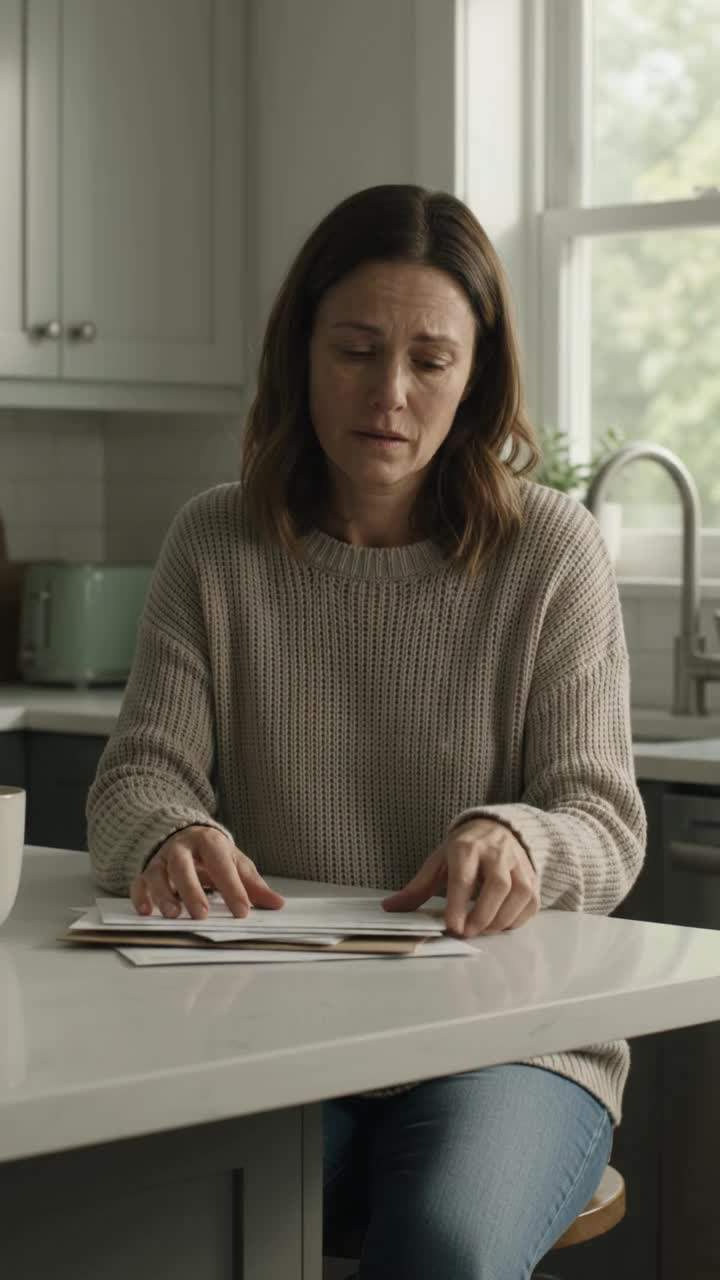
One afternoon, as I checked the mail on my way to hospice, a particular envelope caught my eye.
It was from a real estate attorney, a name I didn't recognize.
My heart gave a little lurch, a feeling of unease settling deep in my stomach.
Why would an attorney be contacting Mom's house?
Mom certainly wasn't buying or selling anything.
My hand trembled slightly as I tore it open.
Inside, a formal letter discussed a recent property transfer.
My eyes scanned the words: "Seller: Eleanor Thompson... Buyer: Hawthorne Investments..."
A cold dread began to spread through my veins.
This couldn't be right.
Mom was lucid, but completely incapacitated, unable to sign anything.
She couldn’t have agreed to sell her beloved home.
I immediately called Lisa, my voice tight with a question I dared not voice.
"Did you get any strange mail about Mom's house?" I asked, trying to sound casual.
There was a pause, a beat too long, before she replied, "Oh, probably just some legal stuff, don't worry about it."
Her tone was dismissive, almost too quick.
That night, I couldn't sleep.
A terrible suspicion gnawed at me.
The next morning, instead of going straight to the hospice, I drove to the county records office.
My hands were shaking so much I could barely fill out the request form.
The clerk returned with a thick file, and I opened it with a sense of impending doom.
There it was, in black and white.
A deed of sale, signed and notarized just three weeks prior.
Mom's signature was there, or a shaky imitation of it.
And beneath it, a power of attorney, granted to Lisa, dated only a month ago.
My vision blurred.
My own sister.
My own flesh and blood.
She had sold Mom's house.
While Mom lay dying, barely clinging to life.
I drove straight to Lisa's house, my foot heavy on the accelerator, my mind a whirlwind of disbelief and rage.
The front door swung open before I even knocked, Lisa standing there, looking pale and defensive.
"What is this?" I demanded, thrusting the papers at her.
She flinched, her eyes darting between my face and the documents.
"Sarah, I can explain," she stammered, her voice thin.
"Explain what, Lisa? Explain how you forged Mom's signature? Explain how you sold her home out from under her?" My voice rose, raw with emotion.
She started to cry, but her tears felt fake, theatrical.
"Mom needed care, Sarah! Expensive care! You weren't doing enough!" she sobbed, throwing blame.
The lie was so transparent, so cruel.
Mom's hospice care was fully covered by her insurance and savings.
The house was her legacy, not a piggy bank for "expensive care."
"You didn't need the money for Mom, did you, Lisa?" I whispered, the realization hitting me like a physical blow.
Her eyes dropped, unable to meet mine.
"My gambling debts, Sarah," she mumbled, barely audible.
"My mortgage was past due. I was going to lose everything."
The words hung in the air, cold and devastating.
She hadn't just betrayed Mom; she had betrayed me, our family, everything we stood for.
The house, which Mom had poured her heart into, was gone.
Sold to a faceless investment company.
The funds, I later discovered, were already mostly gone, swallowed by Lisa's debts and poor choices.
Mom passed away a week later, unaware of the devastating betrayal.
We never told her.
How could we?
It would have broken her heart in her final moments.
I attended her funeral, numb, a chasm opening up between me and my sister.
Lisa was there, playing the grieving daughter, a sickening charade.
Every sympathetic glance from friends, every shared memory, felt like a fresh wound.
The pain of losing Mom was almost overshadowed by the searing agony of this betrayal.
Our childhood home, the place where Mom had hoped we would always feel her presence, was now just a transaction.
An irreversible consequence of greed and deception.
The last time I saw it, the 'For Sale' sign had been replaced by a 'Sold' sign.
New, unfamiliar curtains hung in the windows.
The rose garden, Mom’s pride and joy, looked neglected.
It felt like a part of my own history, my own soul, had been ripped away.
I called Lisa a few weeks after the funeral.
She picked up, sounding wary.
"Are you ever going to try to make this right?" I asked, my voice devoid of emotion.
"I don't know what you want from me, Sarah," she said, her voice thin.
"I want our home back, Lisa," I replied, knowing it was impossible.
"I want Mom's legacy honored. I want my sister back."
But the sister I knew was gone, replaced by a stranger capable of such a profound act of selfishness.
The bond we once shared was severed, irrevocably broken.
The trust, annihilated.
Sometimes, I still drive past the old house, a ghost in my rearview mirror.
A pang of loss, sharp and acute, pierces me every single time.
It's a constant reminder of what was stolen, not just a house, but a piece of our family's very foundation.
And I know, with chilling certainty, that some wounds never truly heal.