I remember the crisp autumn air clinging to my skin as I stepped out of the cab, the grand facade of the St. Regis ballroom shimmering under the city lights. I was Eleanor Vance, a veteran journalist, and tonight was another one of those glittering charity galas I had covered countless times. This one, however, was special; it was hosted by Arthur Sterling, the celebrated philanthropist whose name was synonymous with selflessness and success.
Arthur was, by all accounts, a marvel. His rags-to-riches story, of overcoming early hardship to build a vast empire and then dedicating his life to helping the less fortunate, was legendary. I had written glowing pieces about him myself, charmed by his charisma and the sheer scale of his generosity. But there was always a tiny, nagging voice in the back of my mind, a subtle incongruity I could never quite place.
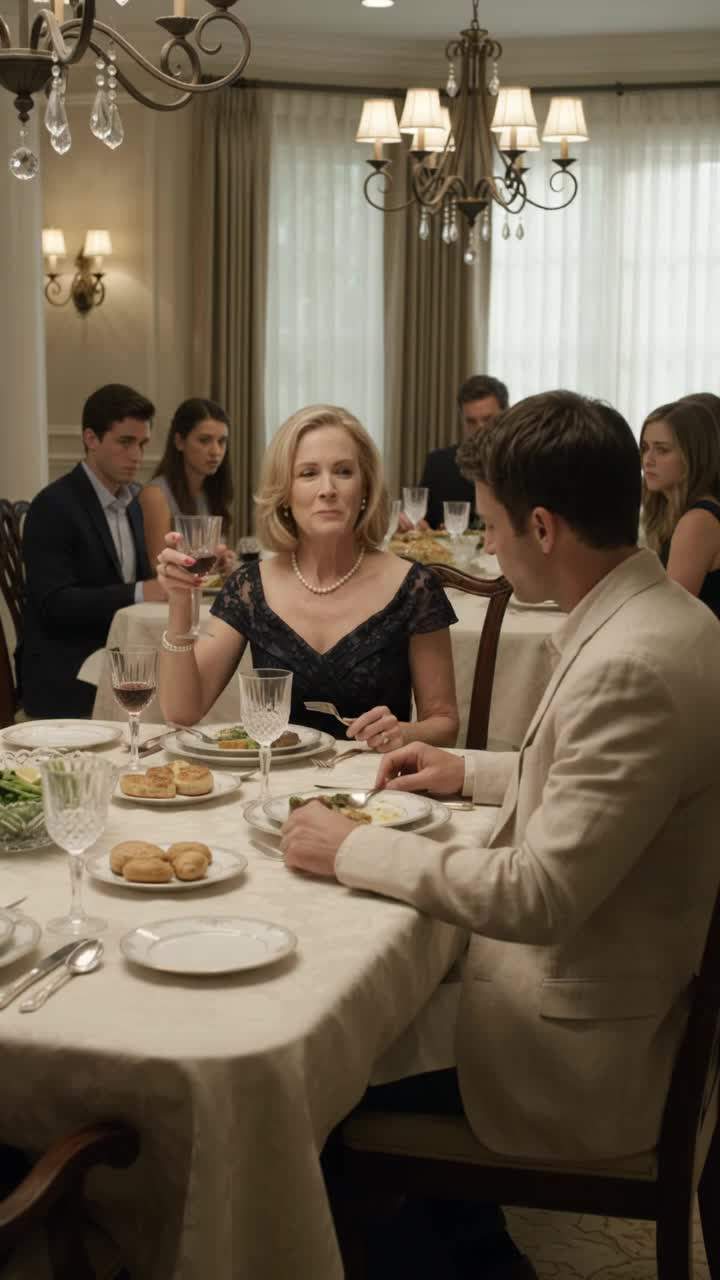
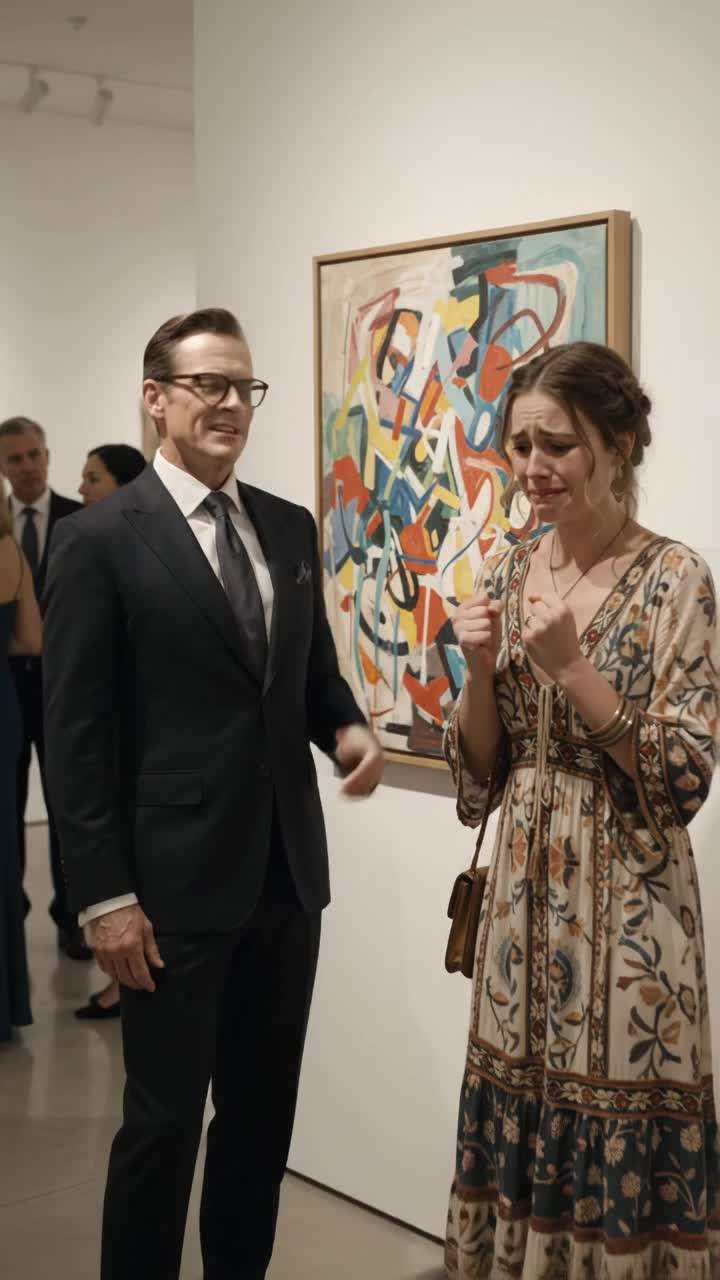
The ballroom was a symphony of opulence: crystal chandeliers casting a warm glow, the murmur of elegant conversations, the clinking of champagne flutes. Arthur Sterling, impeccably dressed in a custom-tailored suit, exuded confidence as he took the stage. His speech began, a masterful blend of humility, inspiration, and calls to action. He spoke of resilience, of forgotten children, of the dignity every human being deserved. He was a picture of grace, a beacon of hope, and the audience hung on his every word, myself included.
Then, she appeared.
A ripple of confusion spread through the back of the room, followed by hushed gasps. My eyes, trained to spot the unusual, immediately darted to the commotion. A woman, frail and stooped, her clothes tattered and her hair a wild, silver halo, was pushing past a bewildered security guard. She moved with a desperate, almost manic energy, her eyes fixed on the stage, on Arthur.

The guard tried to stop her, a polite but firm "Ma'am, you can't be here," but she swatted his hand away with surprising force, her voice cutting through the sophisticated din like a rusty blade. "Let me go! He needs to hear me!"
Arthur, mid-sentence, faltered. His confident smile wavered, replaced by a flicker of irritation, then a stark, unsettling terror as his gaze finally met hers. It was a look I had never seen on his composed face, a raw, primal fear that chilled me to the bone. The entire room seemed to hold its breath.
She reached the edge of the stage, her frail arm shooting out, her bony finger trembling as she pointed directly at the revered philanthropist. "You!" she shrieked, her voice raspy but carrying surprising power across the silent hall. "You are no son of mine!"
The words hung in the air, a bombshell exploding in the heart of the elegant affair. Arthur recoiled as if struck, his face draining of all color. The microphone in his hand emitted a sharp squeal, a sound as jarring as the woman's accusation. Security guards, now fully aware of the gravity of the situation, rushed forward, but she stood her ground, her eyes blazing with a lifetime of pain and fury.
"Security! Get her out of here! Now!" Arthur’s voice was strained, laced with a desperation that belied his public image. His carefully constructed facade had cracked, revealing a frantic, cornered man beneath. The audience erupted in a cacophony of whispers, gasps, and the sudden clicking of phone cameras. The night, once a celebration of goodwill, had devolved into a spectacle of raw, public humiliation.
I watched, numb, as the old woman, still screaming, was physically escorted off the stage, her cries of "Alan! My son, Alan!" fading as she was led away. Arthur, shaken but quickly regaining a semblance of control, stammered apologies, attributing the disturbance to a "confused individual" and assuring everyone the evening would continue. But the spell was broken. The saint's halo had been tarnished.
The next morning, the incident was all over the news, a scandalous snippet from an otherwise pristine reputation. The woman was identified as Elara Miller, a homeless individual with a history of mental health struggles, according to Arthur Sterling's PR team. But the fear I had seen in Arthur’s eyes, the visceral terror, told a different story. My journalistic instincts, long dormant under Arthur's polished narrative, screamed that there was more to uncover.
I started digging. I pulled old records, traced Arthur Sterling's official biography, and cross-referenced it with any mentions of Elara Miller. His story always began with him arriving in the city as a young man, a lone wolf with nothing but ambition. There was no mention of family, no past to speak of before his meteoric rise. It was too clean, too perfect.
My investigation led me to forgotten towns, to dusty archives, and eventually, to a small, forgotten neighborhood where an Alan Miller had once lived. The pieces slowly began to fit, forming a devastating mosaic of deceit. Alan Miller, I learned, was Arthur Sterling. He had indeed come from humble beginnings, not as an orphan, but as the son of Elara Miller, a hardworking woman who had sacrificed everything for her ambitious boy.
Neighbors remembered Elara, a kind but struggling single mother, working multiple jobs to keep a roof over their heads. They also remembered her son, Alan, a bright but intensely private boy who harbled a deep resentment for their poverty. He was always dreaming of a life far removed from their meager existence. And then, he vanished. One day he was there, the next, he was gone, leaving behind a heartbroken mother and a trail of unanswered questions.
I found Elara in a shelter, a shadow of the woman who had stormed the stage. She was frail, her mind occasionally wandering, but when she spoke of Alan, her memories sharpened with a painful clarity. She recounted how he had left, promising to send for her once he made his fortune, a promise that had dissolved into years of agonizing silence. She had searched, written letters, made phone calls, but her son, her Alan, had simply ceased to exist, replaced by a ghost.
Years later, she had seen Arthur Sterling on television, his face older, refined, but undeniably her son's. The initial joy had turned into a burning indignation. How could he, her Alan, be a celebrated philanthropist while she struggled for food and shelter? How could he preach compassion while abandoning his own mother? The gala was her last, desperate cry, her only way to reach the son who had erased her from his life.
The decision to publish my findings was not easy. It meant dismantling a hero, shattering an illusion, and exposing a raw, ugly truth. I knew the backlash would be immense. But Elara's pain, Arthur's calculated cruelty, and the fundamental betrayal of trust were too profound to ignore. My article, "The Philanthropist's Ghost: Unmasking Arthur Sterling's Fabricated Past," was released a week later.
The public reaction was swift and furious. Arthur Sterling's carefully constructed world crumbled. His charity organizations faced immediate scrutiny, his donors pulled out, and his public image was irreparably shattered. The man who had been revered as a saint was now reviled as a fraud, a man whose philanthropy was merely a sophisticated mask for a deeply corrupted soul.
Elara, though still fragile, found a measure of peace. The truth was out. She received an outpouring of support from strangers, donations pouring in to ensure her comfort and care. She never got the apology she deserved from Arthur, who retreated from public life, his silence a final, damning admission of guilt. But she had reclaimed her identity, and in a way, her son.
I, too, was changed. The cynical part of me, the part that had always questioned the polished narratives, was affirmed. But my heart ached for Elara, for the lost years, for the son who chose ambition over love. The incident served as a stark reminder that beneath the glittering facades of power and philanthropy, raw human stories of betrayal and abandonment often lie buried, waiting for the truth to be unearthed, no matter the cost. It was a painful lesson, but one I would carry with me, a testament to the enduring power of truth.